Showing posts with label wild food. Show all posts

Friday, November 22, 2013

California Bay Nuts


Coffee substitute?  Bay nut truffles?  If you don't already know, get hip to one of our yummiest native wild foods, California bay nuts. Relative to the avacado, the California Bay Laurel (Umbellularia californica) has a myriad of uses from food and medicine, to furniture, flooring, cabinetry, and other woodworking.  


On a recent field trip to Point Reyes my son and I collected a bunch of bay nuts.  I brought them home and sat them in a bowl on the table to fully ripen. 


After all the skins were pretty dark, I peeled off the outer fruit which resembles a tiny avocado.  I then gave them a good rinse in a colander and roasted them in a shallow baking dish for about 45 minutes at 350 degrees.  I let them cool and cracked off the shells which revealed the bay nuts looking almost identical to roasted coffee beans just bit lighter in color. Into the grinder they went (with some cacao nibs for good measure of course!) and whola...my very own roasted Bay nut coffee.  It's pretty delicious, I must say I'm hooked, especially with fresh, frothy cream and honey.  Well worth the effort, all natural, hand gathered and without that jittery effect coffee can have.  Now I just need my year's supply! Here is the link to a great local video on how to process bay nuts.  Enjoy!


Saturday, February 9, 2013

Wildcrafting Nettles


Yesterday I escaped with a friend for a much needed excursion to our favorite spot to pick stinging nettles.  A nice gentle hike meandering along the creek was healing and long overdue.  The nettles were not very high but flourishing and plentiful with their leaves unfolding in the sunshine.  The thing I love most about nettles is how they sing.  If you are present, you can feel their vibration as you sit with them, they sing all around you.  Before we began filling our bags we hiked further down the trail to the ocean...what a magnificent day!


When we harvest nettles we try to take only the leafy tops, especially this early in the season.  The plants will continue to grow and if we like, we can go back every few weeks for more throughout the spring. For better or worse, my hands have become so tough from all the farm chores, the nettles barely stung me.  The plants at this time of year are particularly potent as the energy is concentrated in the newly emerging leaves.  Nettles has a variety of uses you can read more about here.  


Once back home the nettles were rinsed and dried in the dehydrator for later use as tea.  I did have plans to add some fresh nettles to my sauerkraut today.  So after clipping all the leaves from the stems and giving them a good wash, I used the mortar and pestle to smash the leaves just enough so they would release their juice and not sting while I mixed the kraut by hand.  


My experiments resulted in two different versions...purple cabbage kraut with fresh nettles and some organic nettle leaf powder for an extra kick...


...and sea kraut with green cabbage, fresh nettle, grated ginger, kombu, and dulse flakes.  I still have a big bag left which may end up as either an invigorating green pesto or a nice stimulating nettle, red clover glycerite.  Spring is almost here, it's all about cleansing, blood building, nourishing, and rejuvenating.  Out with the old and in with the new!


Thursday, December 13, 2012

A Wild Winter Feast


Post Thanksgiving, we felt that a wild feast was in order so we invited a group of friends, neighbors and family to join us in celebrating together over an enchanting spread of both homegrown and locally foraged wild edible delicacies.  On the menu...homegrown Cornish hens and rabbit roasted in the cob oven with butternut squash, wild green salad with miso vinaigrette, wild oyster mushroom soup, tomato-chard quiche, sauteed apples/sweet potatoes/onions-w/figs and walnuts, rabbit pot pie, braised parsnips and celery root, pumpkin bulgar pilaf, and cranberry onion relish.  (We still have yet to catch one of the wild turkeys so prolific in our area!)


For dessert; steamed persimmon pudding, pineapple guava sorbet, apple sauce cake, popping corn, and caramel apples.  Our beverages were hot yogi chai and pomegranate ginger water kefir.  Not bad for a spontaneous soiree.  We enjoyed and gave thanks for the bounty and good company.  As we approach the beginning of this winter season we are staying mindful of each and every blessing and the quiet simplicity of nature and family that we cherish so dearly. 


Be with those who help your being.  
Don't sit with indifferent people, 
whose breath comes cold out of their mouths.  
Not these visible forms, your work is deeper.

A chunk of dirt thrown in the air breaks to pieces.  
If you don't try to fly, and so break yourself apart,  
you will be broken open by death,
when it's too late for all you could become.  
Leaves get yellow. The tree puts out fresh roots 
and makes them green.

Why are you so content with a love that turns you yellow?
-Rumi

Tuesday, May 22, 2012

Weeds To The Rescue


"Let food be thy medicine and medicine be thy food. " 
-Hippocrates


This season has been particularly uncomfortable for allergies.  I, for one, had a couple of weeks of severe symptoms.  I don't suffer from traditional hay fever, but I do occasionally get random allergic reactions to unknown food triggers.  I had not experienced these symptoms in years but recently I had an awful flare up and found myself desperate for relief.  As I lay in bed one morning with my eye lids almost swollen shut, I remembered my friend Cleavers.  After years of experience, I now have a strong tendency to listen to myself. That inner voice in all of us that is so often ignored can be a guiding force of wisdom.  

Cleavers climbing next to the compost bins

So I grabbed a basket and went looking for some fresh specimens of this sticky weed.  Well, it is the perfect time of year around here and I didn't have to look far.  There is a profuse amount of this plant growing all over our property.  Cleavers (Gallium Aparine) is known by different common names; Goosegrass, Stickyweed, and Bedstraw are just a few.  But the way most people know Cleavers is by the way it persistently sticks to your clothing.  My son likes to surprise me by throwing it on my shirt or hair.  


This wonderful weed strengthens lymphatic activity, reduces allergic reactions, eases tender swollen breasts, PMS symptoms, and mild lymph edema.  To harvest, cut the top two-thirds of each plant while it is in flower or setting seeds (the seeds look like burrs).  You can then make a tincture, tea, or my preferred method, fresh green juice. 


To make the fresh juice I gathered a basket full of leafy tops, brought them inside and rinsed them lightly.  At first I attempted to put them through my juicer, but since I do not have a Vita mix, that attempt failed.  Cleavers is way too fibrous for my wimpy machine so out came the Cuisinart blender.  


I added a little water to the plants, enough to get them to turn over and blended until I had a nice even green juice.  Then I strained the mixture and added a couple of juiced apples.  Delicious and very cooling.  I think I drank 2-3 pitchers full.  I just kept making more as it was very calming to my inflamed system.  


So all you gardeners, foragers, and hikers out there, don't think of Cleavers as a nuisance. Harvest some when in season, use it as a spring tonic, and reap the health benefits.  


Wednesday, April 25, 2012

Shaggy Parasols


A brief mushrooming expedition through our local wilds, with a knowledgeable mycologist neighbor, led us to identify and harvest a small quantity of late flushing Shaggy Parasols.  The first two pictures are actually specimens I found down on the bottom of our property under some Eucalyptus trees the day before.  I pulled them out to get a proper ID from our friend who confirmed they were indeed Shaggy Parasols.  

These mushrooms can be huge with a pleasant aromatic odor, and taste to me like what I imagine beef would taste like (or maybe vegi beef from a vegetarians perspective).  
REALLY delicious and flavorful!  The Shaggy Parasol can be prepared the same way as the Chanterelle, cooking for a long period of time to break down the chitin.


It was exciting to find these first wild edible mushrooms on our hillside and now that I know where they will bloom I can check back in that spot each year.  


Remember, caution must be exercised when identifying the Shaggy Parasol, whose poisonous look alike, the Green Spored Lepiota can be very dangerous.  Of course always use the utmost caution when identifying ALL wild mushrooms! 


Thursday, November 17, 2011

Chanterelles


I have always had a passion for wild foods, fungi in general I find quite mysterious.  However, the warnings about those species that can be fatal have been a deterrent for me to gather wild mushrooms myself, even after taking several classes and reading a handful of books.  I still feel the best way to harvest mushrooms is with an expert!  A recent hike in our local parts with a new friend and neighbor of ours (who happens to be a mycologist) led us on an expedition to find chanterelles.  These delicious wild mushrooms have a wonderful scent some say smell like apricots but I think they are sweet and earthy with a delicate meaty flavor.


We learned that any and all edible mushrooms should be well cooked before consuming, as raw mushrooms have carcinogens which over time can be toxic.  (So much for those white button mushrooms in your salads.)


To prepare the chanterelles first gently wash the dirt off, being careful not to rub the gills to much since all the flavor is in there.  Then remove any brown parts, cut or tear the remaining clean mushrooms into small pieces and saute in lots of butter with an onion.  It is important to saute them for a long time, until the water is all cooked out and they start to look very meaty.  They also need to be cooked right away after being harvested.  I washed and cooked a huge basketful then put them in pint jars to freeze.  I will pull them out here and there for omelets, quiche, pasta dishes, or whatever we like mushrooms with (except these are way better than any grocery store mushroom).  You can really eat them with any meal they are so yummy!


Wednesday, February 9, 2011

Many Uses of Stinging Nettles


Technically it is still winter but spring is filling the air and that always means one thing to me...almost time to harvest stinging nettles.  It may still be a little early but this warm spell has got me itching to get out to the woods.  When I was in herb school this is one plant I got to know very well.  After drinking a quart of nettle tea every night for 2 weeks, I watched my skin and hair glow and my energy sore.  Nettles is definitely a healing plant so if you don't know about it, learn more and if you just forgot, now is the time to use your green allies for spring cleansing and rejuvination! 
I just recieved a wonderful recipe from a friend that has been passed down for generations from her grandfather in Germany.  I can not wait to try it out.  (Thanks Anna!)

Stinging Nettle Liquid Manure
Stinging nettle liquid manure has balancing and healing properties, stimulates growth and chlorophyl production. Worms love soil that is fertilized with this manure.

-Use the whole fresh plant cut in pieces. (possible to use dry plants as well) 
-Prepare a plastic, ceramic, or wooden pot or barrel (no metal pots).  Put in as many plants as you have.  Add enough water so that the plants are covered (best if you have rain water or use water that has been standing for a couple of days in the sun), cover with a piece of chicken wire to avoid small animals from falling in.  Don't fill the pot to the top because the liquid will foam during the fermentation process. Let the pot stand in the sun for about 2 weeks. Stir at least once a day. 

-A smell will develop and might offend your nose, so don't keep it too close to the house.

-The process has finished when the liquid has a dark color and doesn't foam anymore. Now you can cover the barrel with a lid. Dilute the liquid 1:10 or if you have used a small pot with a lot of nettle plants, 1:20 and water your garden with it.

-Other herbs to try: Symphytum/ Comfrey - lots of protein, the liquid manure is rich in nitrogen and potasium, good as tomato fertilizer (Symphatum can be combined with stinging nettle to make the manure)

-You can use all sorts of herbs combined: chamomile, mint, majoram...... try experimenting! You can also add some manure from chickens or cows (without the straw) or ripe compost.

-Use the liquid manure on your compost - that is the safest way. Otherwise make sure that you dilute it enough and don't spray over plant leaves but water the soil.

There are so many uses for this extraordinary plant. 
(Feral Kevin has an inspiring clip on juicing fresh nettles, www.feralkevin.com.)

You can try making nettle soup...


or nettle quiche...


If you are not familiar with this plant, get more ideas and learn how to harvest by clicking here, http://www.youtube.com/watch?v=D9ZdKdhKfcw

Happy foraging!

Wednesday, January 5, 2011

A Few Green Allies

In morning mist
a frenzy of drops
from the tree
-Issa


One of the majestic Eucalyptus trees lining the farm
Yesterday's hike around the farm and the adjoining empty land with my son was amazing.  I love seeing everything through his 7 year old eyes, he is one of the keenest observers (and avid collectors) I know.  After all the rain the woodland floor is teeming with new growth.  We both felt like we were inside a huge salad bowl, surrounded by edible greens.  I want to share a few things I have learned about some of these common and useful plants most people either overlook or call weeds. 

Plantain leaf (cooling and drying)
Recently we had quite a severe bought of poison oak run through our household.  Our youngest had it the worst and after a little more than 2 weeks it is finally on its way out.  The saving grace seemed to be washing with Technu lotion over and over, even days after exposure to help contain the rash from spreading and then applying fresh aloe leaf to cool it down and sooth.  I was kicking myself after walking down the hill and noticing plantain popping up everywhere.  This plant is really good for poison oak (and ivy), bites, stings, diaper rash, and any itchy skin irritations, especially with burning or prickling sensations.  As a kid I learned you can chew up the leaf and spit it out onto your skin if you have a bug bite or bee sting.  You can also use it as an eye wash  for sore eyes or conjunctivitis.  Just make an infusion with the fresh leaves and use the tea as a wash topically.  Another great plant for poison oak is jewelweed.  http://www.youtube.com/watch?v=f2wNhs9s5Wo  


Cleavers (cooling and drying)
\

Cleavers is out in all of her glory.  Another cooling and drying plant that can be useful in psoroasis, eczema, dandruff, and other dry skin conditions.  This is a good one topically as a compress for fever, sunburns, and bleeding wounds.  Here is one of my favorite naturalists talking about cleavers as a wild edible food.  http://www.youtube.com/watch?v=hQ3jfhI94yY&feature=youtube_gdata_player
 I will be going back to harvest a bunch to juice in the next couple of days. 

Mallow (cooling and moistening)
This mallow plant is flouishing under our black walnut tree.  The leaves and flowers of common mallow can be applied as poultices to wounds or drunk as an infusion to soothe coughs.  It is yummy cooked as a vegetable when young and tender. The original marshmallows were made from a plant called marshmallow, (related to common mallow) by boiling pieces of the root of the plant in water, adding sugar and whipping. Then, the thick, white confection was dropped in spoon fulls onto waxed paper to dry into candy.


New growth on a wild artichoke plant

Old wild artichoke head long gone to seed
I think it is beautiful when you can see the different cycles of the seasons on the same plant.  One old seed head that survived the rains and a new baby artichoke growing from the plant.  These plants are extremely sharp and hard to get to without poking yourself but if you can manage it, you can get a free and abundant supply of artichoke hearts that are similar to the domesticated variety, not to mention the leaves make a good digestive aid.   


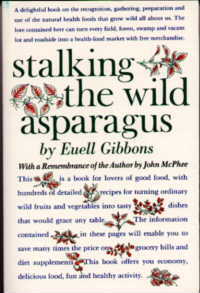
Sorry for the blurry photo...do you know about this book?  It is one of my all time favorites!  An excellent read and knowledge passed down that we just may need sometime in the near future. 


*Just have to make sure that you all know not to pick or eat any plant that you are not familiar with.  Lots of plants look alike and some are poisonous.  Please go out and learn from an experienced naturalist or herbalist!